Back
Learn how to sell across Amazon, Etsy, and TikTok Shop US at the same time, stay compliant, and keep inventory and profit in sync.
Ecommerce

Relying on a single sales channel puts your entire business at the mercy of one algorithm, one fee structure, and one policy change. A sudden account issue, a search ranking drop, or a shift in platform rules can cut off your revenue overnight if that channel is your only one.
That's exactly why more cross-border sellers are running Amazon, Etsy, and TikTok Shop US together instead of picking just one. Each platform reaches a different kind of buyer, and combining them well can smooth out the risk that comes with depending on any single channel.
What Each Platform Is Actually Good At
Before splitting your catalog across channels, it helps to understand what each one is genuinely built for. They don't compete for the same kind of buyer.
Amazon | Etsy | TikTok Shop US | |
Buyer intent | Search-driven, already decided what to buy | Search-driven, looking for unique/handmade items | Discovery-driven, impulse and content-led |
Best for | Established SKUs with proven demand | Original designs, personalized/POD items | Trend-driven products, viral potential |
Fulfillment | FBA available | Seller-fulfilled (or third-party) | Seller-fulfilled or TikTok Shop logistics |
Amazon rewards products that already have search demand behind them. Etsy rewards originality and personalization. TikTok Shop US rewards content that stops the scroll; sales there often start with a video, not a search query.
The Etsy Compliance Point Most Sellers Miss
This is worth being precise about, since it directly affects which products you can list where.
Etsy prohibits reselling mass-produced items sourced from a wholesaler and listed as if they were handmade. That part is widely known. What's less understood is that Etsy's Creativity Standards explicitly allow a "Designed by a seller" category: original designs you create yourself, produced or printed by a disclosed production partner, or offered as a digital download.
In practice, that means:
Generic dropshipping (reselling items you didn't design, sourced from a supplier catalog) is not allowed on Etsy
Print-on-demand with your own original designs is allowed, as long as you disclose your production partner in the listing
For sellers running POD and dropshipping side by side, this usually means reserving Etsy for your own original designs and using it as your "designed" channel, while broader dropship SKUs stay on Amazon and TikTok Shop US, where this restriction doesn't apply.
Dividing Your Catalog Across Channels
Rather than listing your entire catalog everywhere, most sellers get better results by matching products to the platform they fit best:
Send proven, search-demand SKUs to Amazon. If a product already has a track record of converting from search, Amazon's buyer base is set up to find it.
Reserve original, personalized designs for Etsy. This is also where the compliance point above matters most.
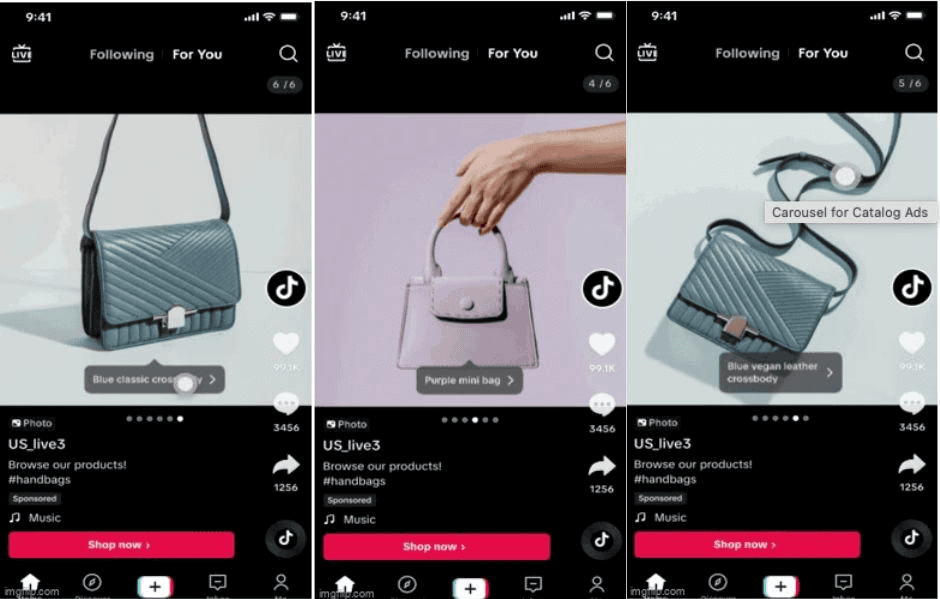
Test new and trend-sensitive products on TikTok Shop US first. Its discovery-driven format rewards content and creator partnerships more than search optimization, making it a faster way to validate whether a new product resonates before scaling it elsewhere.
Let TikTok Shop performance inform the other two. A product that gains traction through TikTok content often has enough proof of demand to justify listing it on Amazon next.
If you're still narrowing down which products are worth testing in the first place, this year's trending dropshipping products is a useful starting point, and AI tools built for POD sellers can speed up how quickly you research and list across channels.
Keeping Inventory and Fulfillment in Sync
Running three channels at once introduces a real operational risk: overselling a product that just went out of stock on one platform while it's still showing as available on the others.
A few practices help reduce this:
Centralize your stock source of truth, whether that's a supplier feed, your own inventory system, or a multi-shop management tool, rather than updating each platform manually
Build in a buffer for fast-moving SKUs rather than syncing at exact stock levels, since sync delays between platforms are common
Review sync frequency regularly, especially around trend spikes on TikTok Shop US, where demand can jump faster than manual updates can keep up
Getting your TikTok Shop listings properly optimized also reduces friction here, since accurate, complete listings sync more reliably across integration tools than incomplete ones.
Tracking Profit by Channel, Not Just Revenue
Revenue alone can be misleading across channels, since fee structures and ad costs differ. A product doing strong numbers on one platform can quietly be less profitable than the same product doing smaller numbers elsewhere, once fees and advertising are factored in.
Instead of comparing top-line sales, track net profit per platform, per product. This usually reveals that certain SKUs are worth scaling on one channel and not worth the effort on another, even if total revenue looks similar on the surface.
Frequently Asked Questions
Can I sell the exact same product on Amazon, Etsy, and TikTok Shop US? Yes, as long as it complies with each platform's own rules. The main exception is Etsy, where the product needs to fall under handmade, vintage, or the "designed by a seller" category rather than generic reselling.
Do I need separate inventory for each platform? Not necessarily, but you do need a reliable way to sync stock levels across all three, so you don't oversell. Many sellers use a shared supplier feed or multi-channel listing tool rather than managing each platform manually.
Which platform should I start with if I can only manage one right now? That depends on your product type. Search-ready products tend to perform well starting on Amazon, while trend-sensitive or design-led products often validate faster on TikTok Shop US first.
Is it worth using TikTok Shop US just to drive traffic to my Etsy or Amazon listings? It can work, but TikTok Shop US itself is built to convert directly in-app. Many sellers find it more effective to list and sell directly on TikTok Shop rather than treating it only as a traffic source for another platform.
Conclusion
Combining Amazon, Etsy, and TikTok Shop US isn't about listing everything everywhere; it's about matching the right products to the right platform and keeping inventory, compliance, and profit tracking consistent across all three. This kind of full-ecosystem thinking is what separates sellers who scale sustainably from those stuck testing one channel at a time.
Want help figuring out how to split your catalog across these platforms the right way? Ecomdy's team offers 1:1 consultations to help cross-border sellers get this setup right from the start. Contact us now!