Back
Learn how to scale TikTok Ads effectively in 2026 with proven strategies, budget best practices, and optimization frameworks to increase performance without hurting ROAS.
TikTok Ads

Scaling TikTok Ads is one of the biggest challenges for advertisers today. Many campaigns perform well on small budgets, but once the budget increases, performance often declines: CPA rises, ROAS drops, and delivery becomes unstable.
The key reason lies in how TikTok’s algorithm works. Unlike traditional platforms, TikTok relies heavily on machine learning and behavioral signals. This makes scaling less about “spending more” and more about maintaining stable data signals while expanding reach.
If you’re new to TikTok performance strategies, you can first explore our guide on targeting best practice TikTok ads to understand how targeting works differently on this platform.
Understanding TikTok’s Learning Phase Before Scaling
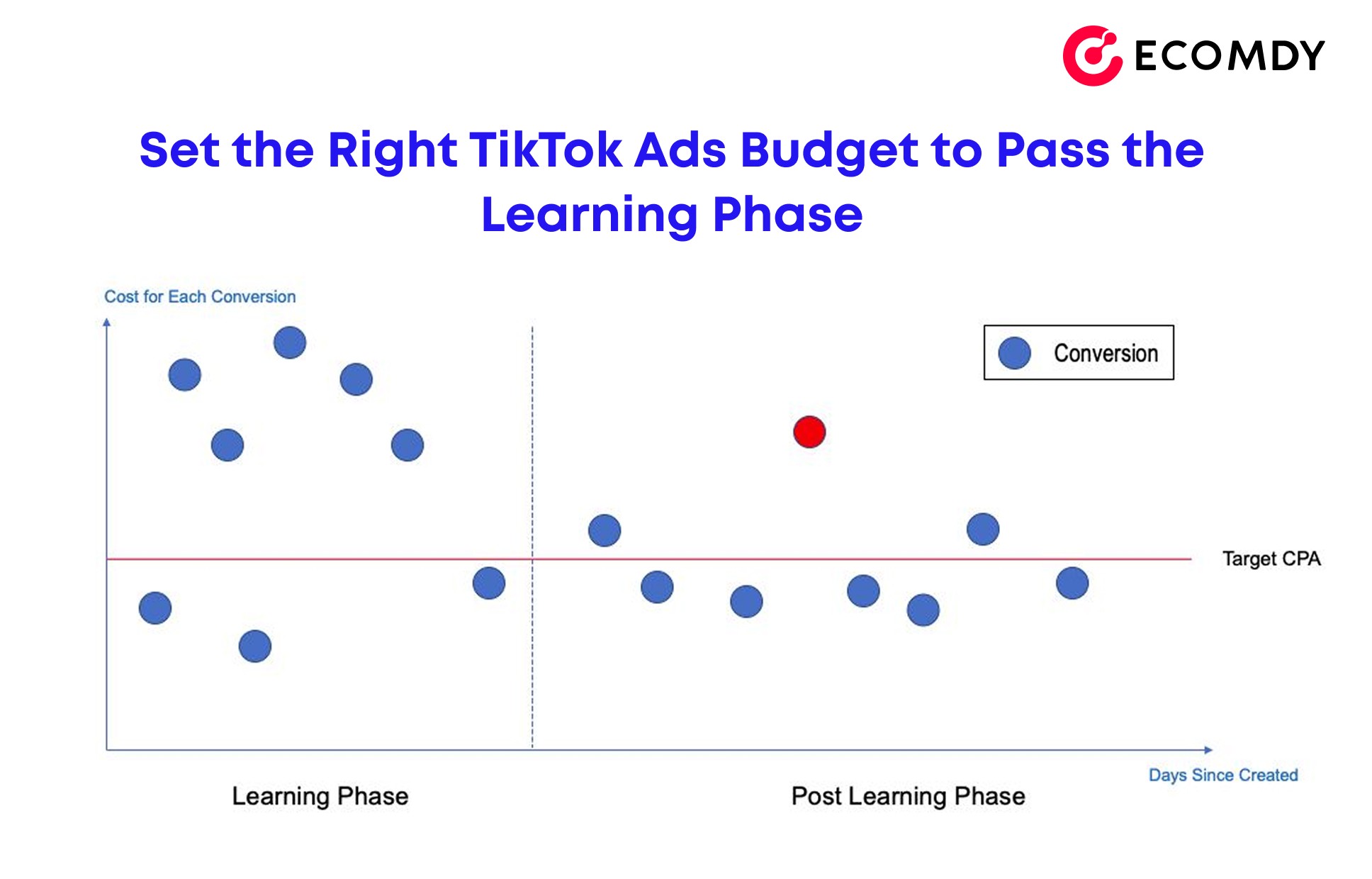
Before scaling any campaign, you must ensure it has exited the learning phase. During this phase, TikTok’s system tests different audience segments to find users most likely to convert. Performance is unstable, and costs can fluctuate significantly.
Industry benchmarks show that campaigns typically need:
Around 20–50 conversions within 5–7 days to stabilize
Consistent delivery and spend utilization
Minimal structural changes
If you scale too early, the system may re-enter learning, causing performance to drop. This is why many advertisers fail: they scale based on “feeling” instead of data readiness
Budget Planning: The Foundation of Scaling Success
Budget is not just a constraint; it’s a signal to TikTok’s algorithm. To generate enough conversion data, TikTok recommends:
Setting a daily budget of at least 10× your target CPA
Ensuring campaigns can generate consistent daily conversions
Avoiding underfunded campaigns
For example:
If your target CPA is $10 →, your daily budget should be at least $100.
A budget that is too low limits learning and prevents optimization. This is especially critical when using automation-based campaigns like Smart+.
To understand how automation impacts performance, read our breakdown of smart vs manual campaigns, what the real difference is in 2026.
Vertical Scaling: How to Increase Budget Safely
Once your campaign is stable, you can begin increasing your budget. However, scaling too aggressively can disrupt performance.
Best practices:
Increase budget gradually (20–30% every few days)
Monitor CPA and ROAS after each adjustment
Avoid editing multiple variables at once
Sudden budget increases force TikTok to explore new audiences too quickly, which often leads to higher costs. Think of scaling as expanding a stable system, not restarting it.
Horizontal Scaling: Expanding Without Breaking Performance
Horizontal scaling is one of the most effective ways to grow and spend time safely. Instead of pushing one campaign too hard, you:
Duplicate winning ad groups
Test new creatives
Expand audience signals
TikTok recommends running:
3–5 ad groups per campaign
3–5 creatives per ad group
This structure helps generate more data and allows the system to optimize faster.
Creative Scaling: The Real Growth Lever

Creative is the most important factor in TikTok Ads performance. Unlike other platforms, TikTok is content-first. This means your ability to scale depends heavily on your creative pipeline.
Key insights:
Most ads fatigue within 7–14 days
Performance drops if creatives are not refreshed
New creatives unlock new audience segments
To build a strong creative strategy, you can explore TikTok trends that brands should watch for the latest content trends driving engagement. Winning advertisers don’t rely on one viral video; they build a system for continuous creative testing
Using Automation to Scale Faster (Smart+ & AI)
In 2026, automation plays a critical role in scaling. Solutions like Smart+ allow TikTok to:
Automatically optimize targeting
Allocate budget dynamically
Test creatives at scale
This reduces manual workload while improving efficiency. However, automation requires:
Strong creative inputs
Sufficient budget
Clean data signals
👉 Automation doesn’t replace strategy, it amplifies it
Common Scaling Mistakes to Avoid
Many advertisers struggle with scaling because they:
Increase the budget too quickly
Scale before enough data is collected
Ignore creative fatigue
Make too many changes at once
Rely too heavily on manual targeting
These mistakes disrupt TikTok’s learning system and lead to unstable performance.
Conclusion
Scaling TikTok Ads successfully is about structure, not speed. The most effective advertisers:
Build strong data foundations
Allocate sufficient budgets
Continuously refreshing creatives
👉 Scaling is not about spending more; it’s about scaling efficiently.
Want to scale your TikTok Ads with expert support? Ecomdy helps brands:
Build scalable campaign structures
Optimize budgets based on real performance data
Access advanced tools like Smart+ and GMV Max
👉 Contact us now to scale faster, safer, and more profitably on TikTok 🚀